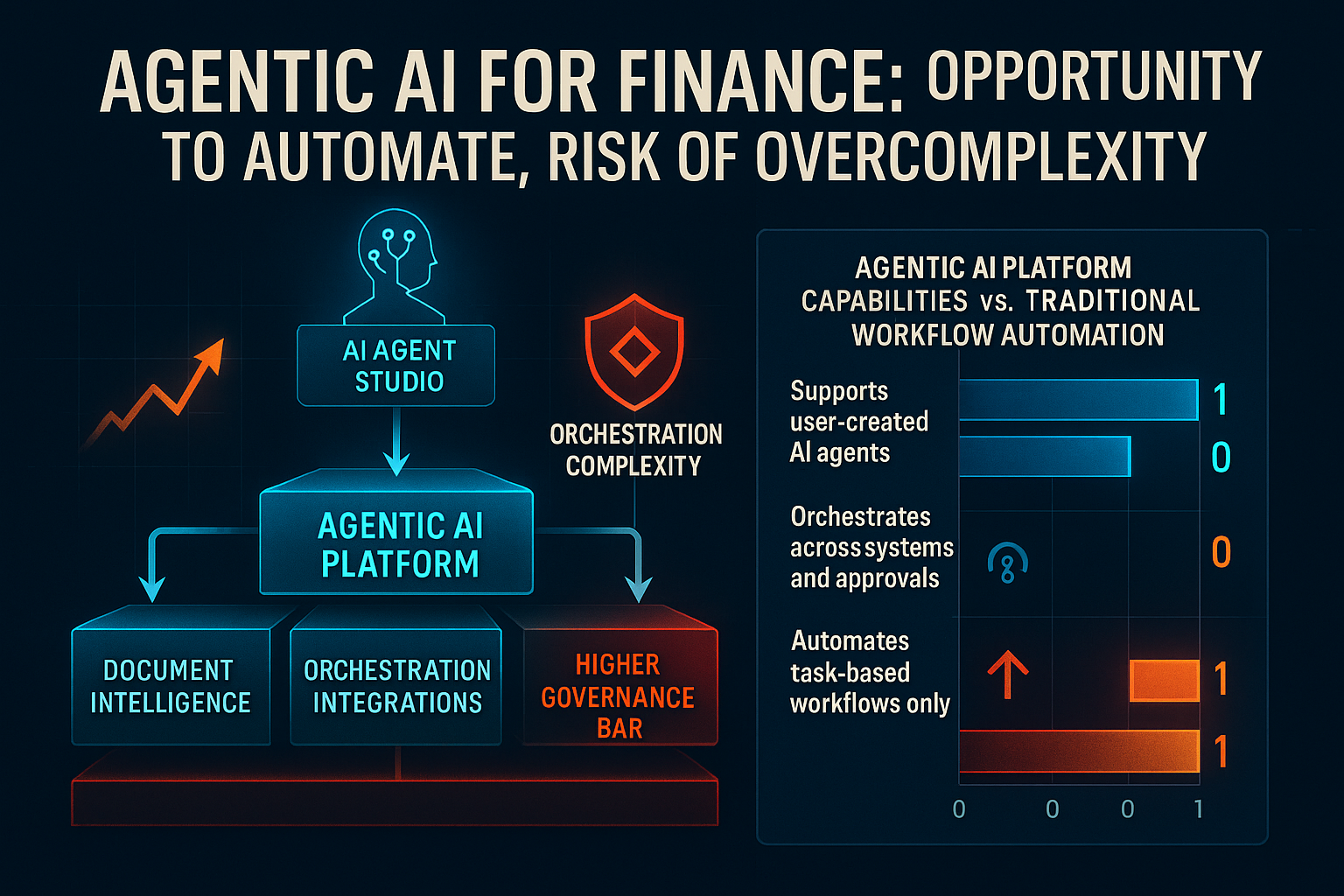
Почему это важно для Агентский ИИ в финансах
Руководители финансов стремятся к большему, чем просто автоматизация отдельных задач. Платформа Kanverse.ai олицетворяет переход к интеллектуальным агентам, ориентированным на результат, — Но при этом возникают риски, связанные с необходимостью усиленного контроля, объяснимости и соответствия корпоративным политикам.
Операционные последствия
- Организации, внедряющие агентный ИИ, могут снизить ручное управление финансовыми операциями, но должны усилить контроль и корпоративные политики.
- Расширение возможностей бизнес-пользователей создает новые требования к поддержке и управлению.
- При сбоях оркестрации или неправильной обработке исключений возрастает операционный риск.
Ключевые данные обновления
Автоматизация направлена на процессы с высоким уровнем вовлечения и документальной поддержкой, а не только простые задачи.
Бизнес-пользователи могут создавать собственных агентов, расширяя доступность.
Сниженный риск замены систем, но стоимость интеграции неясна.
Критерии сравнения
Бизнес-пользователи создают кастомных агентов через ИИ Agent Studio
Возможны более быстрые итерации, но повышаются требования к поддержке и контролюАгентный ИИ оркеструет работу между согласованиями, исключениями и системами
Более высокая гибкость, но возросшая сложность настройки и управленияАгенты работают в рамках существующей корпоративной среды
Ниже барьер замены систем, но неизвестны трения при интеграцииВозможные сценарии
Команды запускают агентов для сложных согласований
Повышение эффективности; Снижение ручного труда; Команды сосредоточены на исключениях и контроле.Настройка и управление политиками перегружают бизнес-команды
Замедление внедрения; Организация сталкивается с узкими местами в управлении и возможными ошибками в процессах.Влияние на рабочие процессы
- Возможность более быстрых и точных финансовых процессов благодаря контекстно-ориентированным ИИ-агентам.
- Бизнес-пользователи получают инструменты для создания кастомных агентов — Снижая зависимость от IT-разработчиков.
- Автоматизация смещает стратегический фокус с потоков задач на оркестрацию решений, но с возросшими требованиями к аудиту и контролю.
Что отслеживать
Ранние модели внедрения покажут, насколько конфигурация подходит для команд без технической подготовки.
Продемонстрирует, насколько платформа хорошо взаимодействует с устаревшими системами и обеспечивает измеримую отдачу от инвестиций.
Выявят юридические, аудиторские или операционные риски, связанные с действиями автономных агентов.
Агентская автоматизация для финансов: новые возможности и новые риски
Что нового: возможности для более интеллектуальных финансовых процессов
Платформа Kanverse.ai выводит автоматизацию финансов за пределы традиционных RPA и задачных ботов. Ее ИИ-агенты используют интеллектуальную обработку документов и политики для автоматизации согласований, исключений и оркестрации процессов.
Бизнес-пользователи, а не только разработчики, получают возможность настраивать и запускать этих агентов с помощью естественного языка, сокращая время до получения результата и расширяя круг лиц, способных управлять автоматизацией.
- Обеспечивает оркестрацию между устаревшими и облачными системами
- Пользовательские агенты могут отражать уникальные финансовые политики
- Сфокусирован на сокращении ручной обработки документов
Риски: контроль, сложность и управление
Предоставление большей автономии бизнес-пользователям может создать проблемы с теневыми ИТ. Необходимы строгие меры управления и аудиторские следы, поскольку агенты принимают решения, связанные с финансами предприятия.
Больше возможностей означает и большую сложность. Командам может быть сложно управлять исключениями и гарантировать, что логика каждого агента соответствует политикам и нормативам.
- Ошибки конфигурации могут повлиять на важные финансовые согласования
- Необходимы четкие меры политической защиты и мониторинг
- Интеграция с устаревшими системами может стать узким местом
Победители, проигравшие и кто принимает решения
Финансовые и сервисные команды, ориентированные на эффективность, получат наибольшую выгоду при успешном внедрении агентов.
Однако команды, не обладающие ясностью процессов или дисциплиной контроля, могут столкнуться с большими проблемами, чем улучшениями.
- Победители: операционные команды, нуждающиеся в гибких и адаптируемых рабочих процессах
- Проигравшие: организации, не готовые к новым моделям аудита и поддержки
- Решающие: руководители финансов и владельцы процессов