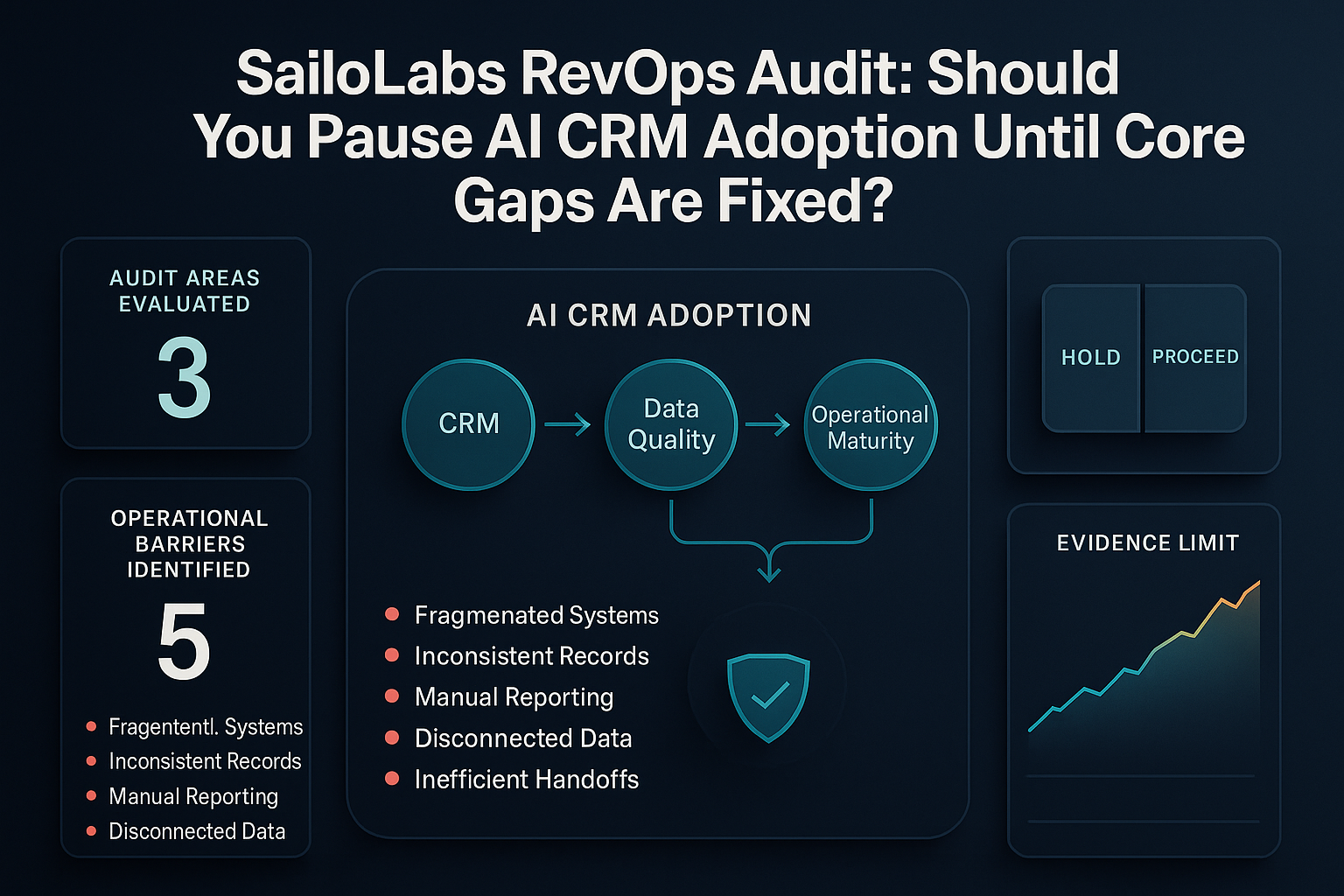
Ключевые данные обновления
Выделено три области аудита для оценки готовности.
Продажи, маркетинг и успех клиентов — Основные сферы внимания аудита.
В качестве целей аудита детализировано пять операционных барьеров.
Влияние на рабочие процессы
- Заставляет команды SaaS учитывать операционные слабости перед инвестированием в технологии ИИ CRM.
- Вероятно, задержит внедрение ИИ агентов в компаниях с недостаточным уровнем зрелости данных, отчетности и интеграции.
- Может стимулировать перераспределение технологических бюджетов для улучшения управления данными, автоматизации процессов и консистентности процедур.
- Создаёт потенциальное конкурентное преимущество для организаций с сильной базой в фундаментальных областях.
Критерии сравнения
Требуется оценка зрелости операций перед запуском ИИ CRM
Повышает барьер перед крупными инвестициями в ИИ, но может предотвратить растрату ресурсовОцениваются интегрированные рабочие процессы и системы
Способствует согласованию, но увеличивает первоначальные усилияВозможный сдвиг в сторону базовых инвестиций RevOps
Может замедлить сроки внедрения ИИ, но способствует долгосрочной окупаемостиПриоритет — Измеримая готовность и масштабируемые результаты
Можно разделить рынок на сегменты на основе фактического захвата ценностиОперационные последствия
- Организации, не прошедшие аудит готовности, могут столкнуться с задержками в проектах ИИ CRM и перераспределением бюджетов.
- Цифровые лидеры могут почувствовать давление ускорить инвестиции в улучшение рабочих процессов и инструменты управления данными.
- Успех в операциях по доходам, управляемых ИИ, может разделить рынок SaaS по уровню зрелости, а не только по затратам на технологии.
- Поставщики и интеграторы, предлагающие базовые услуги RevOps, могут столкнуться с возросшим спросом.
Что отслеживать
Позволит проводить сравнения в отрасли и устанавливать стандарты.
Покажут, дают ли операционные задержки измеримые преимущества в эффективности CRM.
Сделает аудит и последующие исправления проще в масштабном внедрении.
Краткое решение: приоритет готовности перед внедрением ИИ CRM
Кто должен действовать и что стоит на кону
Руководители цифровых операций, RevOps и данных в SaaS-компаниях теперь отвечают за оценку готовности своих команд к внедрению ИИ CRM. Аудит обязывает принимать решения, обосновывая новые бюджеты Agentic CRM с учётом зрелости процессов, данных и интеграций.
Внедрение без решения ключевых проблем может закрепить неэффективность или увеличить технический долг.
- Операторам необходимо оценить зрелость автоматизации рабочих процессов
- Держателям бюджета может потребоваться пересмотр приоритетов
- Руководители данных должны устранить пробелы в управлении и отчётности
Компромиссы: задержка или прямые инвестиции в ИИ
Ускорение внедрения Agentic CRM может показаться привлекательным, но пропуск аудита вызовет трения: инструменты ИИ испытывают трудности с фрагментированными данными и изолированными процессами.
Отсрочка обновлений CRM для исправления фундаментальных проблем может означать отложенные выгоды, но при условии исправления проблем ROI улучшится в долгосрочной перспективе.
- Быстрые действия могут привести к более высоким затратам на интеграцию в дальнейшем
- Задержка может улучшить результаты, но требует терпения и повышения квалификации
- Немедленное конкурентное преимущество для зрелых организаций
Каких доказательств всё ещё не хватает?
Нет публичных данных о том, сколько команд проходит или не проходит аудит, а также о прямом улучшении ROI после устранения фундаментальных недостатков.
SailoLabs указывает на операционные риски, но не предоставляет количественных показателей, данных о проникновении или кейсов.
- Отсутствуют отраслевые эталонные показатели и оценки аудита
- Не раскрываются результаты клиентов и уровни успеха
- Улучшения ROI остаются анекдотичными и не доказанными
Следующие шаги для SaaS-команд операционной поддержки
Начните внутреннюю самооценку зрелости, используя категории из рамок аудита: интеграция, управление лидами, согласованность рабочих процессов и управление данными.
Рассмотрите поэтапный подход: сначала устраните самые рискованные пробелы, протестируйте функции Agentic CRM в пилотных командах и корректируйте действия на основе результатов.
- Внутренняя диагностика против внешнего аудита
- Приоритет исправлений, повышающих межкомандное согласование
- Пилотируйте автоматизацию в зрелых сегментах перед полномасштабным внедрением