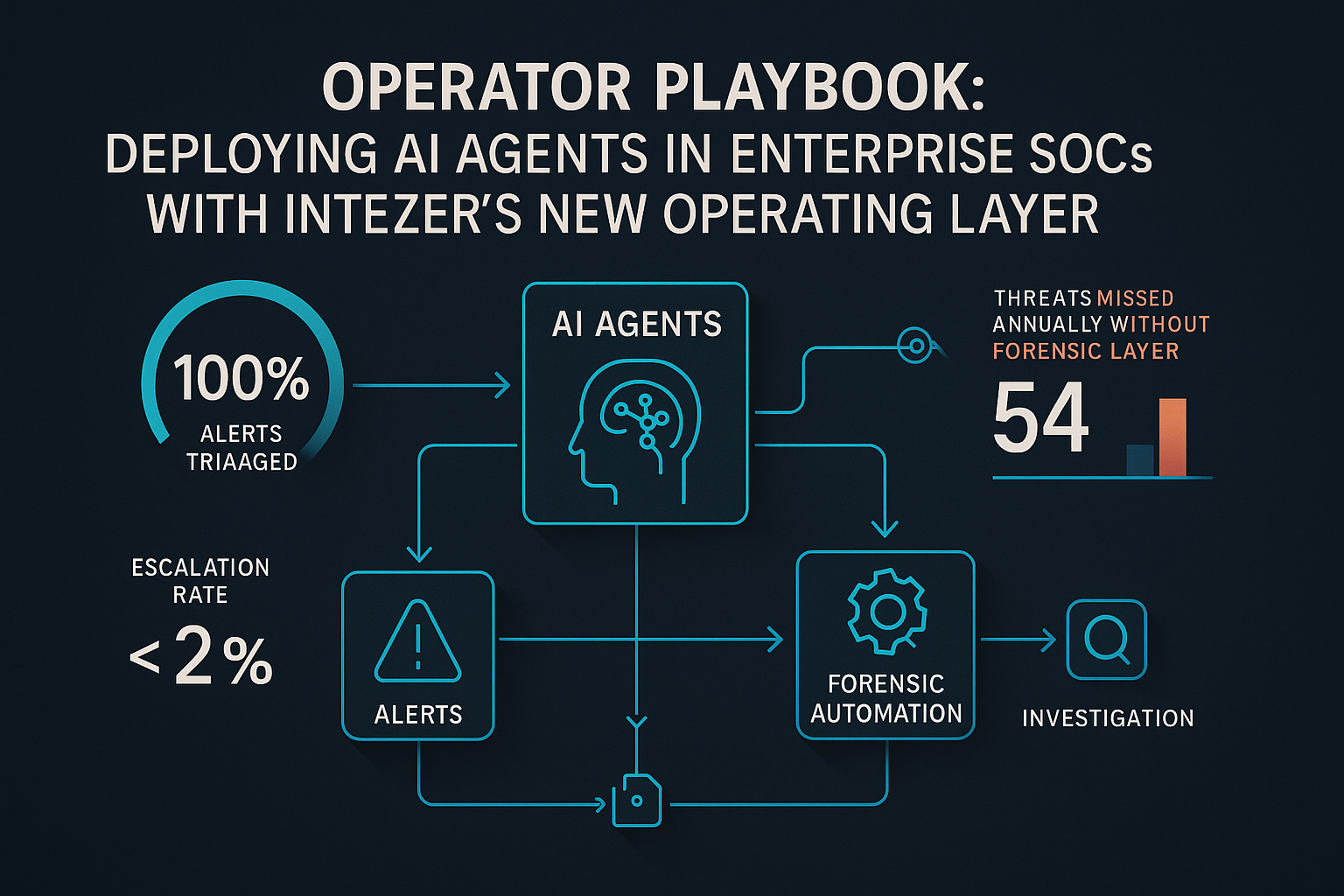
SOC Alert Triage Metrics with AI Operating Layer
%Alerts Autonomously Triaged
Escalation Rate
Threats Missed Annually Without Forensic Layer
Workflow impact
- Letting AI agents access structured forensic knowledge shortens investigation times and increases automated alert coverage.
- With full ownership of case history and triage rules, enterprises can adapt workflows and reporting logic over time without vendor friction.
- The unified MCP layer minimizes integration overhead, allowing teams to redirect focus to judgment-driven response, not repetitive manual triage.
- This in-house model makes organizations less vulnerable to evolving external AI APIs, and lowers ongoing outsourcing costs.
Key data behind the update
The AI-driven SOC layer investigates every alert, regardless of severity.
Less than 2% of alerts need analyst review after AI triage.
On average, 54 true threats per enterprise per year are missed when only a subset of alerts are investigated.
Data is based on more than 25 million alerts examined within the Intezer AI SOC Report.
Operational consequences
- Workflows transition to a hybrid AI–human model: autonomy for triage, supervision for escalations and reporting.
- Alert fatigue drops as less than 2% of all events require escalation, reducing analyst burnout.
- Security operations shift from 'reactive' to knowledge-driven: each action improves future AI accuracy.
- Teams that retain investigation in-house create long-term data compounding effects unique to their environment.
Comparison criteria
100% coverage with forensic investigation through MCP server.
Higher true positive rate and risk reduction with MCP-based approach.<2% escalated to humans after AI review.
Operational efficiency improves; Analysts focus on high-complexity cases.Organization retains complete investigation and triage logic history.
Facilitates compounding AI learning and future migration flexibility.Unified integration—one connector for all data and logic.
Lower ongoing maintenance cost and reduced error surface.Signals to watch
A sustained rate below 2% indicates operationalized AI; Spikes suggest tuning needs or knowledge gaps.
Persistent misses in these areas may indicate coverage or evidence correlation problems with current tooling.
Delays or complexity can signal that foundational operating layers are still lacking.
Drop-offs may expose the hidden cost of externally-held data and logic.
Timeline
- Intezer Announces Revamped MCP Platform
June 18, 2026: Intezer releases its new Model Context Protocol server for enterprise SOCs.
- Immediate Enterprise Adoption Window
Enterprises can now deploy MCP for agentic SOC workflows and request demos.
- First Wave of AI Agent Integration
Teams integrate Claude, Codex, and Cursor into automated alert triage on the new operating layer.
- Coverage and Escalation Benchmarking
SOC teams measure alert coverage and escalation rates to determine operational impacts.
Rethinking SOC AI Integration
Move from Fragmented to Unified AI SOC Architecture
Plugging AI agents directly into detection tools or assembling custom agent pipelines increases integration overhead and does not scale knowledge.
A unified forensic operating layer lets agents leverage institutional memory, historic verdicts, and triage logic from day one.
- Accelerates onboarding of multiple AI models.
- Reduces integration engineering effort and breakage.
- Centralizes workflow logic for ongoing improvement.
Compounding Knowledge and Alert Coverage at Enterprise Scale
Agents inherit and reinforce prior forensic investigations, expanding alert coverage and reducing missed threats in low-severity cases.
Every human decision compounding in the AI system creates a persistent, evolving SOC intelligence unique to the enterprise.
- All alerts are triaged—no severity gaps.
- Customization driven by in-house team, not external vendors.
- Data remains secured and fully accessible.
SOC Decision Models
The optimal architecture splits repetitive triage (fully autonomous) from complex supervision (analyst-guided): AI executes logic, humans handle escalation and tuning.
This cyclical feedback strengthens both the autonomous and supervisory AI roles over time.
- Routine cases handled machine-speed.
- Critical incidents get rapid analyst attention.
- Incident response reports reflect cumulative logic, not isolated outcomes.
Near-Term Steps and Key Measures to Monitor
Operators should benchmark pre- And post-integration escalation rates, threat misses, and workflow onboarding timelines.
Signs of coverage gaps or increasing manual escalations suggest operating layer or knowledge base needs further tuning.
- Monitor under 2% escalation rate as quality threshold.
- Periodically review coverage of low-severity alerts.
- Assess robustness of institutional memory after staff change.