Key data behind the update
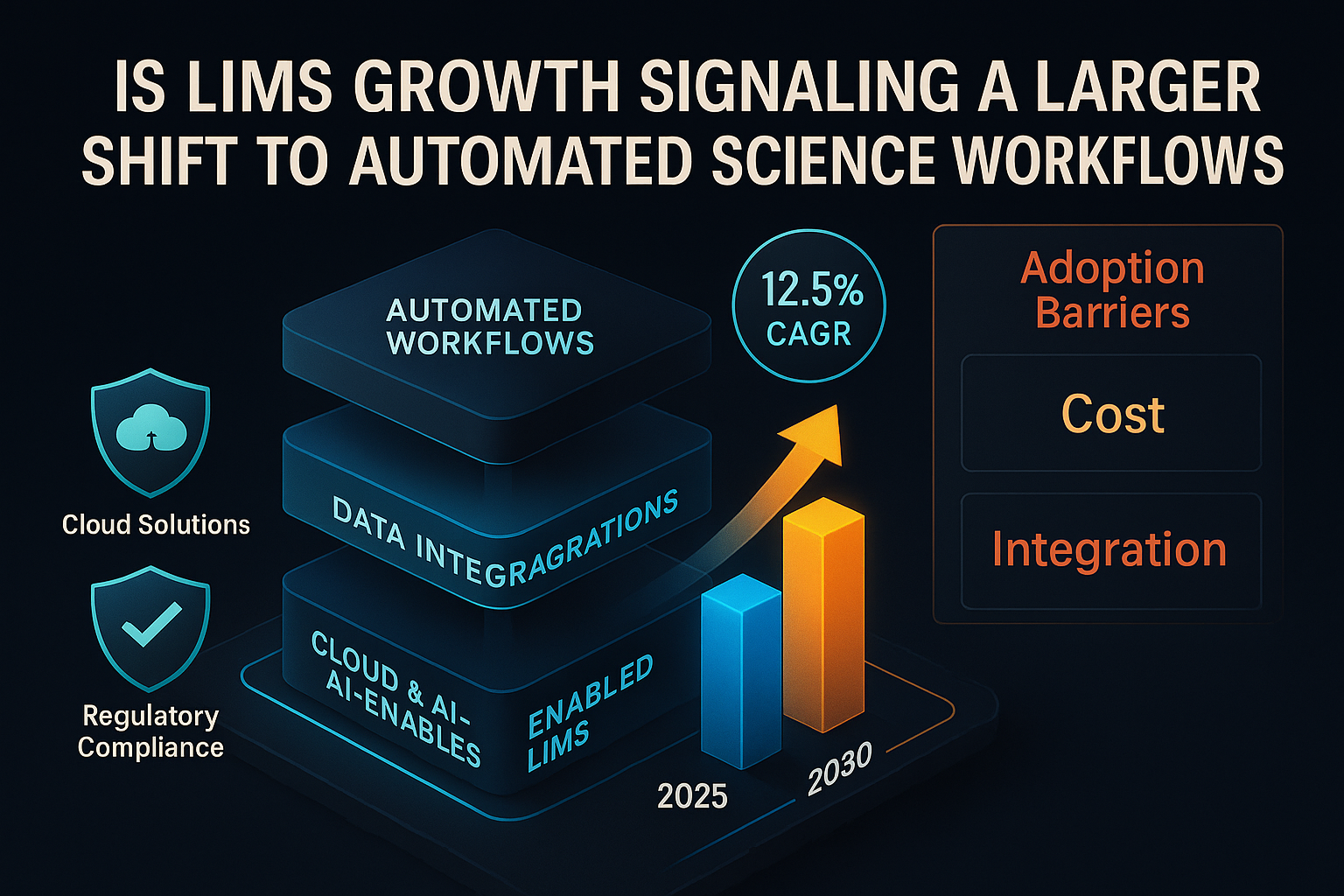
The market is forecast at USD 2.88 billion in 2025. This establishes the short-term market baseline.
A significant forecasted jump to USD 5.19 billion by 2030 illustrates the rapid digitization push.
The expected CAGR of 12.5% shows momentum but also signals potential volatility if barriers persist.
Why it matters for LIMS Growth
The LIMS sector’s momentum reflects a broader push for data transparency, automation, and compliance in scientific operations. Yet unless cloud, pricing, and integration innovations mature, this growth will remain siloed—missing out on the opportunity to drive enterprise-wide digital transformation in both science and operational workflows.
Context behind LIMS Growth
Laboratory operations face escalating complexity due to regulatory pressures and multi-site data needs. While LIMS started as niche, their rapid evolution—driven by pharma, biotech, and emerging markets like cannabis testing—puts them at the forefront of laboratory digitalization. However, the persistence of system integration problems and cost friction maintains the gap between isolated innovation and holistic digital enterprise operations.
Workflow impact
- Accelerated adoption of cloud platforms could push more labs toward integrated, multi-site data management.
- AI and analytics integration in LIMS may streamline scientific workflows, reducing manual intervention.
- Complex cost models risk sidelining smaller labs, hindering widespread digitization.
- Legacy system integration remains a bottleneck for organizations aiming for unified digital operations.
Comparison criteria
2.88 (2025) → 5.19 (2030)
Unprecedented scale, driven by digitization and regulatory factorsCloud-based LIMS gaining significant momentum
Potential shift to SaaS/remote operations if interoperability issues are solvedOngoing, challenging, fragmented
Unless resolved, broader digital workflow automation will be limitedHigh costs persist, vendors testing subscriptions
Price flexibility will determine growth breadthTimeline
- 2025: LIMS market size baseline
Projected at $2.88B. Marks starting point for tracking accelerated growth.
- 2030: Projected target ($5.19B)
If trajectory holds, market will nearly double, contingent on overcoming integration barriers.
Signals to watch
Could lower cost barriers for smaller organizations, broadening market impact.
Would make LIMS viable as a universal digital operations backbone.
Indicates if market expansion is creating new systemic demand.
Signals readiness for autonomous and insight-driven scientific operations.
LIMS Expansion: A Tipping Point for Digital Laboratory Operations?
Growth on Paper: Market Surge or Digital Transformation?
A projected 12.5% compound annual growth rate for LIMS between 2025 and 2030 outpaces the broader enterprise software market. However, the jump from USD 2.88B to USD 5.19B, while impressive, mainly reflects demand from highly regulated and data-intensive sectors.
Without breakthroughs in cross-system integration and pricing accessibility, this expansion risks reinforcing sector silos, not dissolving them.
- Regulatory compliance is the main growth engine.
- Cloud platforms enable multi-site, real-time access.
- On-premise still dominates but cloud is gaining ground.
Integration and Cost: The Achilles’ Heel
Despite robust growth, many organizations hold back due to upfront costs and legacy integration headaches. Laboratories using older equipment or non-standard processes face high friction and may postpone adoption.
Subscription and scalable service models are being tested but are not (yet) industry standard.
- Ongoing high maintenance costs slow adoption.
- SMEs particularly impacted by upgrade ROI concerns.
- Integration complexity remains unsolved.
New Markets: Cannabis and Beyond
Medical cannabis legalization has triggered new demand for specialized LIMS. These labs require highly tailored data and compliance features, pushing vendors to innovate.
It's unclear whether such vertical-specific growth signals broader applicability or simply expands LIMS’s niche footprint.
- Specialized test workflows create custom requirements.
- Overall addressable market grows, but horizontally limited.
- Cannabis, environmental, and industrial labs are watch sectors.
What Changes Would Drive a Real Market Shift?
For LIMS expansion to morph into sweeping digital transformation, integration middleware, open APIs, and cost-effective SaaS models must become widespread.
Adoption of AI-enabled predictive and quality features across platforms could shift labs—and eventually adjacent industries—toward more autonomous workflows.
- Watch for vendor-neutral integration platforms.
- AI-augmented LIMS could make advanced analytics accessible.
- Sustained cloud adoption would enable remote science ops.