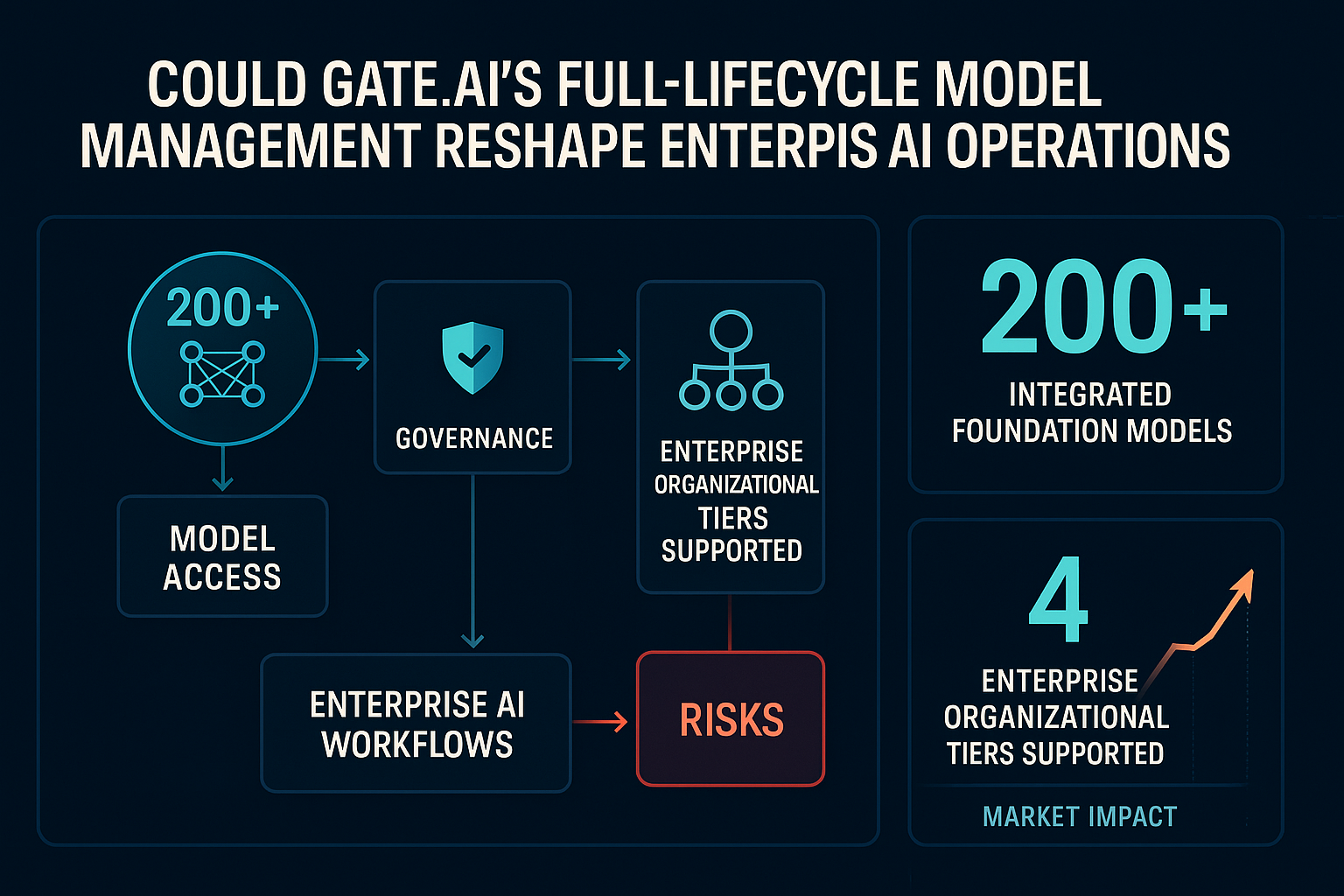
Gate.AI Platform: Integrated Model Access and Organizational Support
Integrated Foundation Models
Enterprise Tiers Supported
Key data behind the update
Signals comprehensive model access, if maintained.
Supports leading model APIs for cross-provider flexibility.
Enables complex, multi-level enterprise structures for permissions and resource tracking.
Suggests potential reach, if cross-sell is effective.
Why it matters for Is Gate.AI's Model Management Platform a
Current enterprise AI adoption is slowed by inconsistent model access, high integration effort, and fragmented cost management. A unified approach, as attempted by Gate.AI, could reduce operational drag, improve risk management, and allow businesses to deploy AI more rapidly, but only if the solution proves compatible and cost-effective at scale.
Context behind Is Gate.AI's Model Management Platform a
Large language model adoption is outpacing the ability of many enterprises to integrate, manage, and govern model usage at scale. Fragmentation across APIs and governance domains creates friction. Gate, traditionally a digital asset trading platform, is leveraging its infrastructure roots to launch an AI platform seemingly designed to simplify these challenges—potentially mirroring earlier SaaS shifts from siloed tools to unified platforms.
Workflow impact
- Operators could reduce platform switching costs by managing all models through a single API.
- Security and compliance teams gain centralized controls for data retention, resource access, and spend management.
- Intelligent model routing promises improved performance-cost alignment, potentially lowering AI service expenditures.
- Multi-tier governance structures may clarify team responsibilities and curb unauthorized access.
- Real-time dashboarding enables granular tracking of usage and spend by team or member.
Comparison criteria
200+ models via single API
Could reduce integration times and operational complexity.Up to four organizational tiers; Centralized keys; Role-based access
Potential for stronger enterprise security and compliance.Quota pools, granular cost dashboards, automated guardrails
Enables real-time spend awareness and proactive control.Automatic vendor fallback and routing
May improve uptime and workflow reliability.Timeline
- Gate.AI upgrade announced
Major upgrade brings unified model management, intelligent routing, and advanced enterprise governance.
- Future: Ecosystem and service expansion
Plans to expand model ecosystem, protocols, and enterprise features for intelligent transformation support.
Signals to watch
Would validate platform usability and governance effectiveness at scale.
Would support true model-agnostic deployment and broader enterprise relevance.
Would indicate growing market momentum toward unified model management.
Would show whether automatic routing and cost controls deliver claimed benefits.
Unified Model Management: Signal or Sideshow?
What Gate.AI Changes in Enterprise AI Workflows
By routing model access through a single API, Gate.AI promises to collapse operational silos. Friction from integrating with numerous model providers can be reduced, enabling teams to switch models to suit evolving workloads and budgets without disruptive rewrites.
- Dynamic model routing optimizes mix of performance and cost.
- Fallback automation helps sustain uptime when primary models fail.
- Operator time spent on integration and migration could decrease.
Governance and Security: New Norms or Incremental Gains?
Role-based management and quota controls centralize key aspects of AI resource governance. With up to four organizational levels and unified key management, IT can implement processes for security, escalation, and cost discipline.
Automated guardrails and real-time visibility offer more granular controls, yet true impact depends on end-user adoption and policy execution.
- Centralized management may ease compliance audits.
- Zero Data Retention default supports regulatory mandates.
- Differentiated access strategies enable customized permissions for teams.
Cost Control: Promise Versus Practice
Enterprise AI spending often spirals due to dispersed tracking and shadow usage. Gate.AI’s quota pools and dashboards bring spend under a single pane of glass, promising improved budget control. Actual savings, however, will depend on whether intelligent routing truly matches model choice to business needs.
- Real-time monitoring exposes outlier consumption.
- Budget guardrails can enforce spend discipline.
- Success depends on user engagement and data-driven policy adjustment.