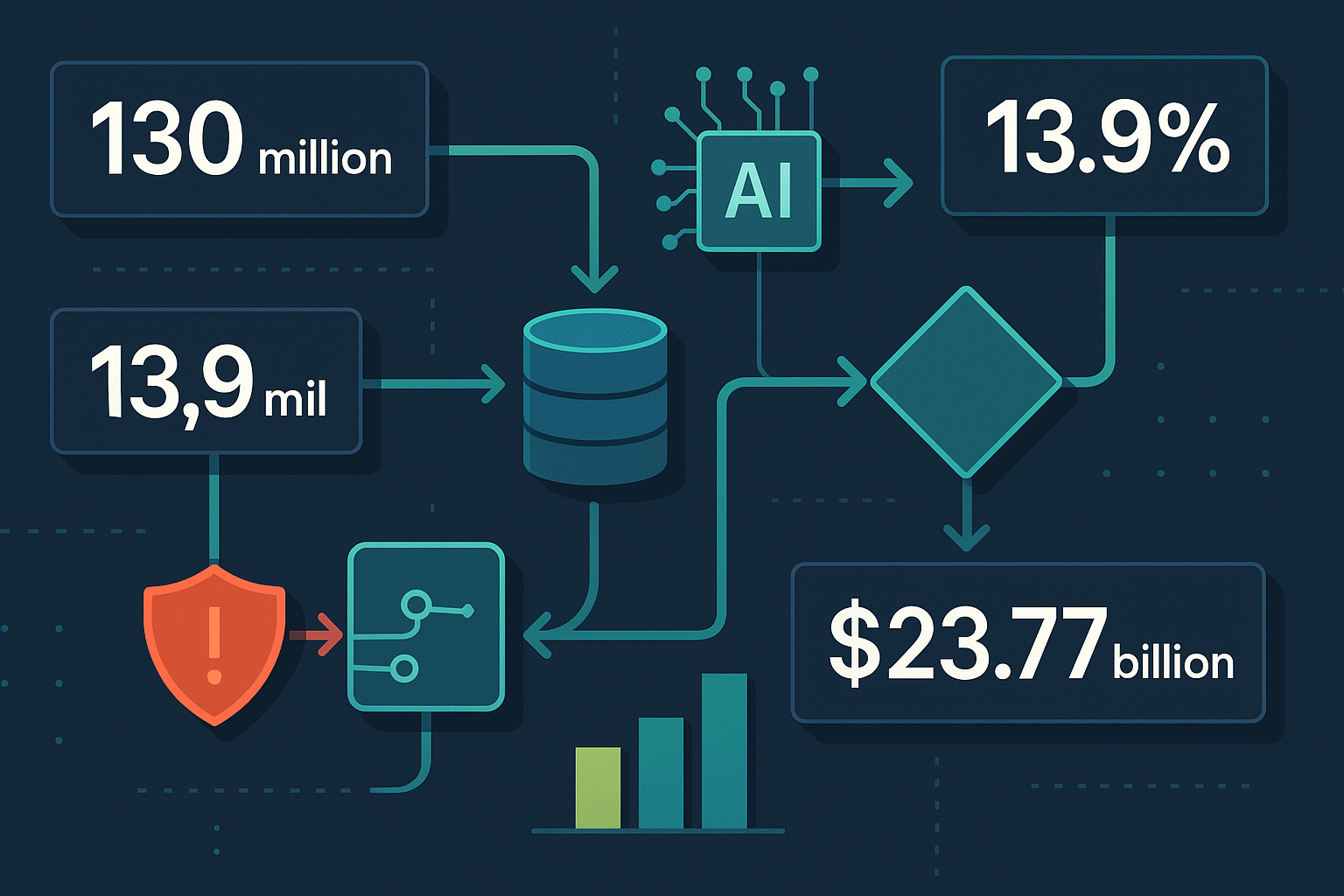
Evidence-backed metrics
Substantial industry exposure: Vite is embedded in countless digital workflows.
Cloudflare already commands over 10% of Vite deployments, showing pre-existing operational traction.
Automation drives crucial spend—integrated stacks can realign market share.
Significant but not exclusive adoption; Risk of single-platform dominance increases if trajectory accelerates.
Numbers behind the shift
Source-reported valuesMarket context at a glance
Source-reported valuesVite ecosystem weekly downloads
Actual results could differ materially from those stated or implied in forward-loo
Workflow impact
- Teams already standardizing on Vite or Cloudflare’s Workers platform can accelerate integration and global deployment but may face tighter coupling than before.
- Those with multi-cloud, hybrid, or non-Cloudflare API dependencies must review workflow portability and resilience under a single-vendor tooling roadmap.
- Open source contributors and toolchain maintainers should anticipate shifts in governance, funding, and roadmap as a major commercial provider absorbs a project at web-scale adoption.
Decision criteria
Cloudflare controls deep integration, open roadmap pledged
Greater feature velocity likely, but with risk to neutrality and migration flexibility.One-click global deploy via unified Cloudflare stack
Operator workflows may get faster, but exit costs increase.Potential shift to Cloudflare platform credits and service fees
Budgets may consolidate, limiting negotiation leverage.Cloudflare as single key vendor for both tooling and runtime
Higher platform risk; Resilience planning needed.Operational consequences
- Operator budgets for edge deployment, build automation, and AI-native workflows may shift toward Cloudflare platform credits and services.
- Platform risk matrix changes: vendor neutrality erodes, raising migration costs for teams needing multi-cloud strategies.
- Potential productivity gains in one-click deploy and edge automation, but at the expense of toolchain independence and open governance certainty.
- Increased likelihood of further toolchain vertical integration by major cloud providers, compressing space for standalone automation tooling.
- Teams ignoring the shift may face unplanned workflow friction or compatibility challenges in future Vite releases.
Signals to watch
Would force urgent architecture or migration reviews for teams avoiding lock-in.
Indicates prioritization of Cloudflare edge, setting path dependency.
Would reintroduce architectural optionality and change future planning.
Operator Analysis: Stack Risk and Workflow Consequences
What Changes Now: Workflow Alignment and Vendor Exposure
Operators previously choosing Vite for neutrality and modularity must now factor in Cloudflare’s influence over roadmap and integration speed. Companies planning edge-native, AI-accelerated deployments will feel these effects most acutely.
Any current or planned Vite-based build pipeline is now indirectly exposed to Cloudflare’s product decisions—even if staying cloud-agnostic remains possible.
- Budget forecasts should model greater spend on Cloudflare credits for global deployment.
- Teams with compliance or multi-cloud requirements must validate workflow portability.
- Operational risk increases if Cloudflare shifts roadmap toward tighter proprietary integration.
Key Risks: Lock-In, Migration Cost, and Open Source Drift
Operator lock-in risk increases as the prevailing open source toolchain integrates deeply with one cloud-edge vendor. Cloudflare pledges neutrality but now steers roadmap and controls engineering priorities.
There is historic precedent for 'open-source-in-name, cloud-integrated-in-practice' outcomes; Vigilance is warranted.
- Migration cost rises if future features are Cloudflare-exclusive.
- Opportunity for speed and integration, but less leverage to stay vendor-neutral.
- Budget impact: possible reallocation toward Cloudflare-integrated workflows if Open-source remain included but incentives favor single-provider convenience.
Operator Decision Points: Who Must Act, Who Can Wait
Teams with mission-critical, automation-heavy, or AI-native web applications on Vite should begin scenario planning now. Multi-cloud and regulated orgs may need governance reviews.
Organizations with loose coupling to Vite or those on alternative tooling stacks may observe before acting—but should monitor for open source commitment changes.
- CI/CD architects should consider parallel stack evaluations.
- Compliance teams must reassess for data sovereignty, especially as platform centralization intensifies.
- Founders should revisit 2026–2027 hiring, integration, and training plans for relevant technologies.
Remaining Uncertainties: Roadmap and Ecosystem Signals
Integration timeframe, true neutrality, and Cloudflare roadmap specifics remain undefined. Operators are left in a holding pattern: wait and monitor, or proactively diversify integration.
Direct vendor communication and open governance activity in coming quarters will reveal if this is precedent for vendor consolidation across next-gen workflow automation.
- Actual product roadmap for Vite under Cloudflare not fully disclosed.
- Unknown how competing vendors will react—alternate toolchain development is possible.
- Ecosystem fund ($1M) for independent contributors is positive, but continued watch on governance required.