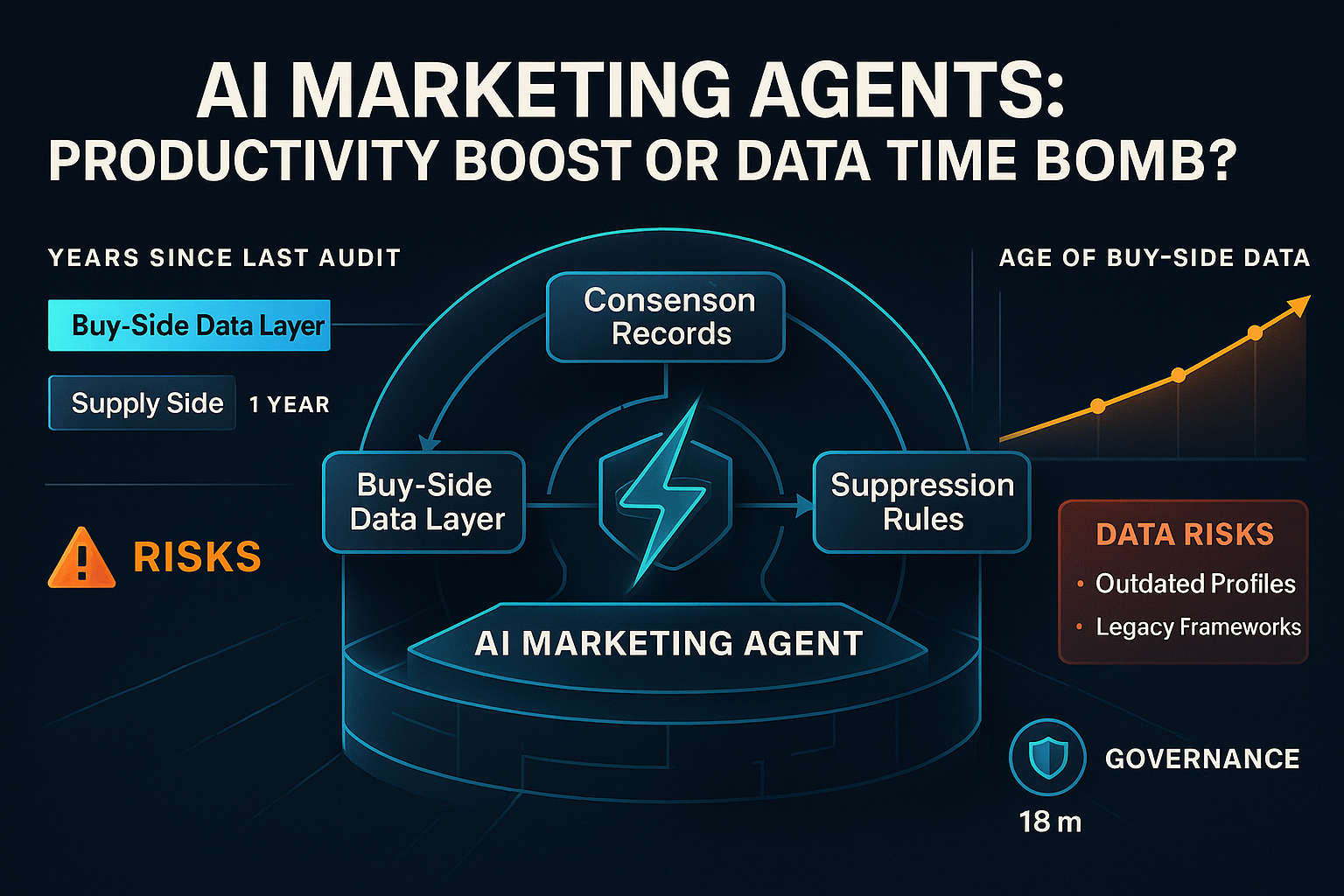
Why it matters for AI Marketing Agents
For operators of digital marketing, workflow, and data systems, unchecked legacy data means AI automation can amplify old errors and silent compliance breaches—problems that manual checks once partially contained but which now scale uncontrollably. Without immediate buy-side data governance, organizations expose themselves to efficiency, legal, and financial risks just as AI expands its control.
Operational consequences
- AI agents may propagate outdated compliance logic, risking fines or brand damage if legacy consent is invalid.
- Business development teams may see unexplainable drops in conversion or opportunity—a result of silent mis-segmentation.
- IT, marketing, and legal stakeholders will increasingly be forced to collaborate on data governance or accept rising automation risk.
- Operational audits will become mandatory for maintaining AI-driven marketing performance and compliance.
- Workflow automation vendors may be pushed to build governance tools directly into their platforms.
Key data behind the update
Key data feeding B2B campaign automation hasn't been formally checked since initial setup, magnifying risk.
Consent records reflect regulations that have since changed, undermining present-day compliance.
Old suppression rules might reference business logics or technologies no longer fit for purpose.
Manual human review caught bad segments, but automation skips this check entirely.
Comparison criteria
Buy-side data not re-verified post-setup (3–5 years)
One-off verifications allow errors to compound, while supply side catches errors before mass distribution.No clear owner for buy-side data layers
Lack of stewardship increases risk and reduces organizational learning from incidents.Issues detected via business incidents, not dashboards
Buy side stays reactive, while supply side can be proactive on data faults.Legacy suppression/logic rules persist indefinitely
Stale buy-side logics block conversions or foster compliance risk long after business context changes.Possible outcomes
AI agents continue making decisions on obsolete data for weeks
Silent compliance or deliverability failures accumulate until business performance triggers a manual audit.Teams implement buy-side data audits, assign ownership, and kill legacy rules
Performance and compliance risks fall, but additional operational overhead emerges for data-heavy teams.Workflow impact
- Compliance exposure: AI-driven sends may ignore changed consent rules, creating silent regulatory breaches.
- Revenue loss: Outdated suppression logic can block valuable prospects or mis-target campaigns, unseen until pipelines stall.
- Lack of accountability: Data governance gaps mean no clear ownership for crucial automation-triggering datasets.
- Dashboard blind spots: Systemic errors go unflagged, surfacing only as operational incidents rather than upstream data alerts.
Signals to watch
Market demand will rise for automated solutions to identify, verify, and retire legacy rules and data fragments.
Organizational structures may shift to tackle data layer ambiguity exposed by AI-driven failures.
Expect more attribution of campaign drops, compliance issues, or brand incidents to years-old unchecked data as AI expands.
AI Marketing Agents and Buy-Side Data: Risk, Opportunity, and Urgent Steps
Upside: Automation Speeds, Lower Manual Work
AI agents let marketing teams act faster and scale campaigns without hand-crafted lists. Tasks like sending, segmenting, and targeting can now run automatically.
This reduces reliance on human operators, boosts workflow speed, and can raise overall productivity in digital systems.
- Automation executes on complex data rules in seconds.
- Less need for routine human checks on sends and suppressions.
- Cost-per-campaign and operational friction fall.
Downside: Legacy Data Magnifies Compliance and Performance Risks
The same automation exposes companies to silent failures. Years-old data layers, untouched since setup, drive AI actions without human review.
Invalid consent, rogue suppression rules, or outdated segments can cause weeks of invisible mistakes—ones that humans used to catch.
- Legacy consent doesn't match current regulatory requirements.
- Suppression logic can block sales without explanation.
- Team churn leaves no clear data steward.
Who Gains, Who Loses
AI-driven systems benefit team productivity and campaign reach. Automation vendors profit as businesses prioritize speed.
But organizations without data audits face rising costs, missed revenue, and risk fines—as legal and marketing own problems neither group set up.
- Winners: Fast adopters who govern their buy-side data.
- Losers: Teams with legacy rules and no stewardship.
- Vendors selling audit and governance tools gain market relevance.
Action: Governance and Data Layer Audits
Assign clear data stewardship. Reverify opt-in and segmentation datasets flagged as historic (18+ months old).
Export and justify all suppression logic—kill rules that nobody can account for. Create enforced review cycles by cross-functional teams.
- Tag and revalidate all key customer data points.
- Document business rationale for every suppression/segment rule.
- Integrate audit cycles into the automation workflow.